How to Taste Champagne Like an Expert: A Beginner’s Guide
Champagne is much more than a sparkling wine. A symbol of celebration, elegance and the French art of living, it is the result of expertise passed down through generations. Behind every bottle lies a unique terroir, passionate growers and a production method recognised around the world.
The good news? You do not need to be a sommelier to fully appreciate a cuvée. By learning to look, smell and taste, you will discover a whole new dimension of Champagne.
Follow these simple steps and enjoy your next glass like an expert.
1. Choose the right glass
Contrary to popular belief, the familiar flute is not always the best choice for tasting.
Professionals now favour a tulip-shaped glass or a white wine glass with a slightly tapered rim, allowing aromas to develop while preserving a lovely effervescence.
The right glass immediately reveals greater complexity and elegance.
2. Serve Champagne at the right temperature
Temperature plays an essential role in tasting.
Champagne served too cold conceals its aromas. Too warm, it feels heavier and loses freshness.
The ideal temperature is:
-
8–10°C for young, fruity cuvées.
-
10–12°C for more complex or vintage cuvées.
A professional tip: place the bottle in a bucket filled with equal parts ice and water for around twenty minutes. This chills the Champagne evenly without compromising its qualities.
3. Observe the colour and bubbles
Before tasting, take a few moments to look at your Champagne.
Notice:
-
its colour,
-
its clarity,
-
its brilliance,
-
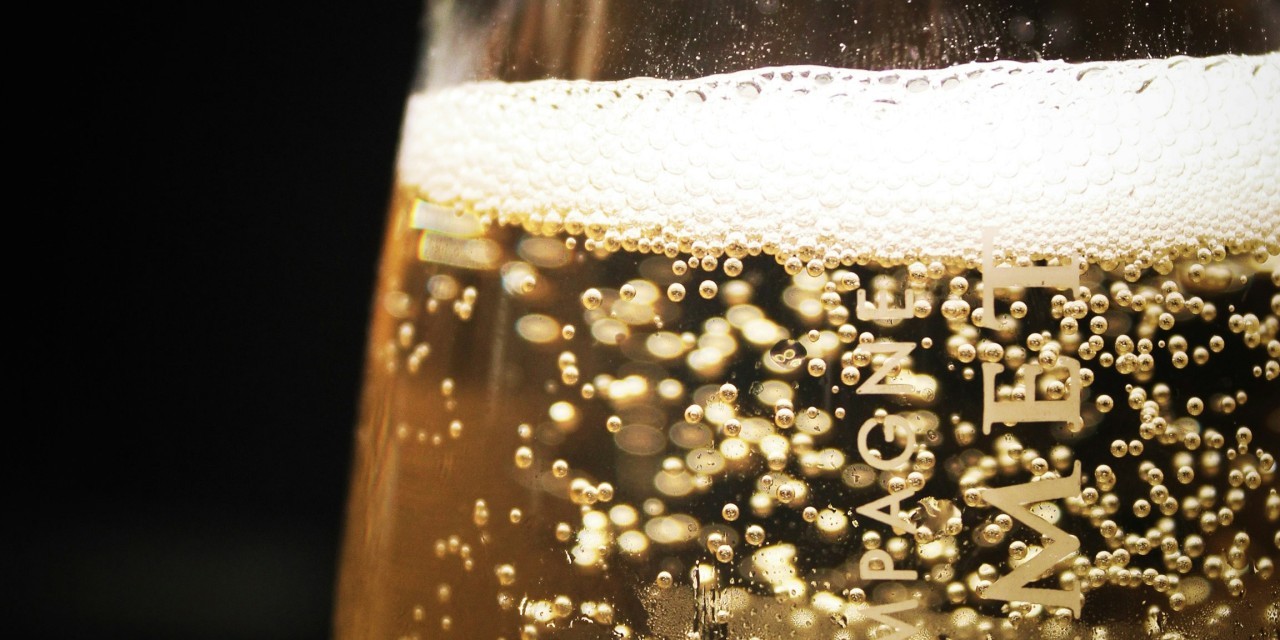
the fineness and regularity of its bubbles.
A pale yellow colour often suggests freshness and citrus, while a deeper golden hue may indicate longer ageing or greater aromatic richness.
Fine, regular bubbles are generally associated with particularly careful production.
This first step already offers valuable clues to the wine's style.
4. Discover the aromas
Gently bring the glass to your nose.
Take a first breath, then swirl the Champagne gently to release more aromas before smelling again.
You may discover notes of:
-
apple,
-
pear,
-
citrus,
-
peach,
-
white flowers,
-
brioche,
-
toast,
-
almond,
-
hazelnut,
-
honey,
-
dried fruit.
Every Champagne has its own personality, shaped by its blend, terroir, ageing and the style of the house or grower.
There is no right or wrong answer: everyone perceives aromas differently.
5. Take your first sip
Take a small sip and let the Champagne move around your mouth.
Focus on:
-
the attack (your first impression),
-
the texture,
-
the fineness of the bubbles,
-
the acidity,
-
the balance,
-
and the length of the finish.
Try to recognise the flavours you identified on the nose.
A great Champagne stands out above all for its harmony of freshness, fruit, finesse and lingering flavour.
6. Understand the main styles of Champagne
No two Champagnes are the same.
Blanc de Blancs
Made exclusively from Chardonnay, it is often fresher, more mineral and elegant.
Blanc de Noirs
Made exclusively from Pinot Noir and/or Meunier, it offers greater power, structure and richness.
Rosé Champagne
Recognisable by its delicate colour, it charms with red fruit aromas and an appealing richness.
Brut Nature, Extra-Brut, Brut or Demi-Sec
Sugar dosage strongly influences Champagne's style. A lower dosage brings its natural character and minerality more clearly to the fore.
Exploring several styles is the best way to discover your preferences.
7. Pair Champagne with food
Champagne is not just an aperitif.
A few classic pairings:
-
Blanc de Blancs: oysters, seafood, sashimi and fish carpaccio.
-
Blanc de Noirs: poultry, mushroom risotto and veal.
-
Rosé Champagne: salmon, duck and red fruit desserts.
-
Vintage Champagne: lobster, scallops and fine dining.
Do not hesitate to experiment: some of the finest pairings are the most unexpected.
8. A few expert tips
To make the most of your tasting:
-
Serve Champagne at the right temperature.
-
Avoid strong perfumes, which can mask the aromas.
-
Take your time: Champagne evolves in the glass.
-
Compare several cuvées to better understand their differences.
-
Write down your impressions to gradually refine your palate.
-
Ask growers questions: their passion is often the best guide.
Above all: enjoy yourself
Tasting is not about complicated vocabulary or strict rules.
What matters is being curious, looking, smelling, tasting and sharing an enjoyable moment.
Every bottle tells a story: of a terroir, a grower and expertise found nowhere else in the world.
Nothing compares to tasting in Champagne itself, among its cellars and vineyards. Meeting producers, discovering how they work and tasting their cuvées where they were born is an unforgettable experience.
At Maison SPARK, we create bespoke experiences that reveal another side of Champagne: private tastings, encounters with passionate growers, cellar visits and personalised itineraries shaped around your wishes.
Because great Champagne is made to be tasted… and, above all, experienced.